The Meteor
The Meteor is a celestial phenomenon that appears during Arthur Dimmesdale's midnight vigil on the scaffold, taking the shape of a vast, dull red letter 'A' that the minister interprets as a divine revelation of his hidden sin, while the townspeople later read it as a sign of Governor Winthrop's angelic ascension, embodying the novel's central tension between subjective guilt and public interpretation.
Appearance and Context
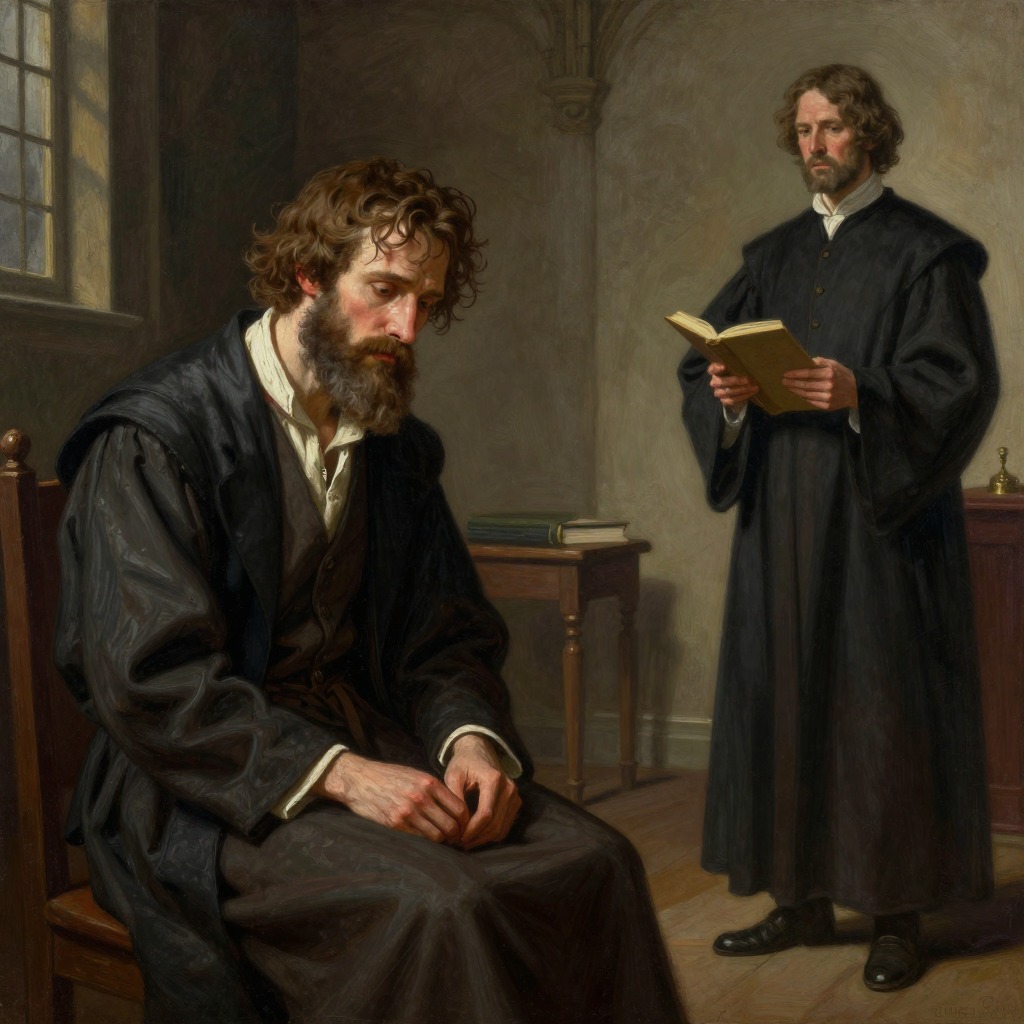
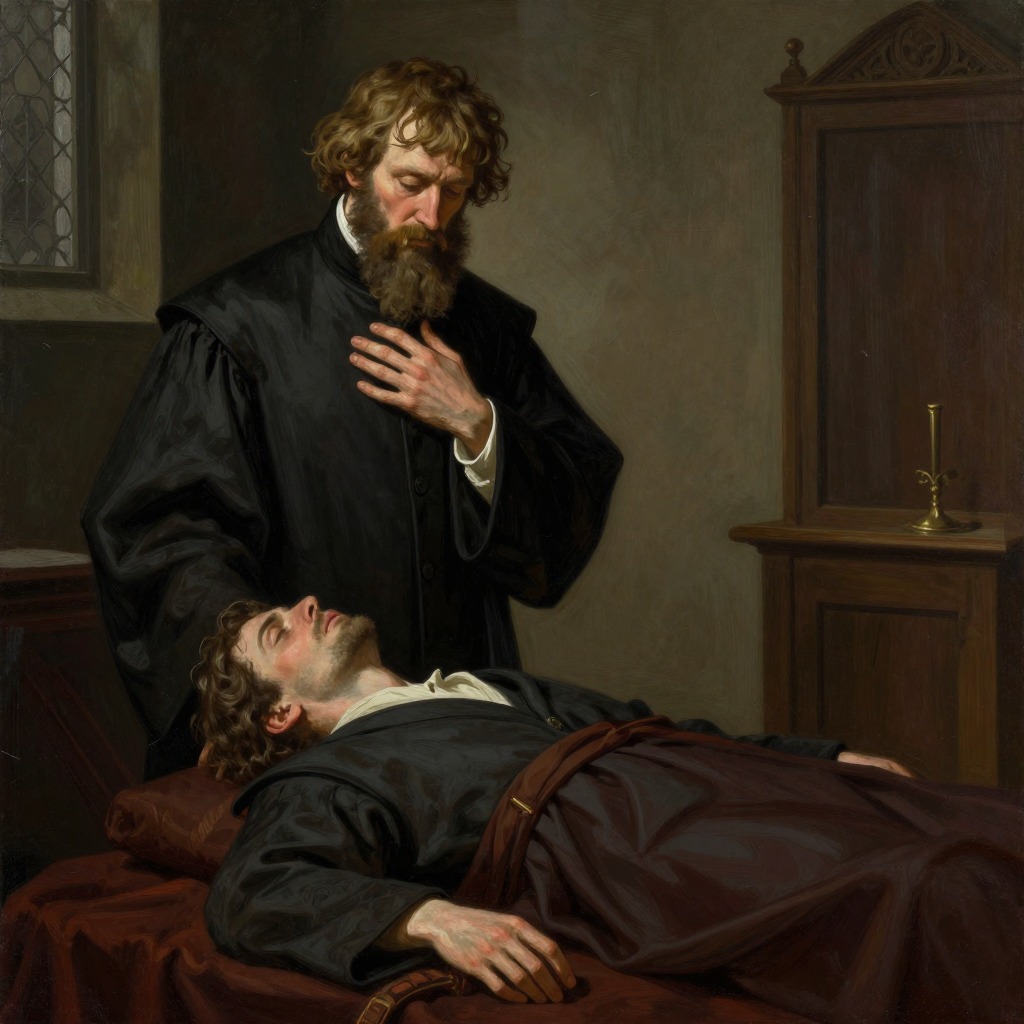
On an obscure night in early May, an unvaried pall of cloud muffled the whole expanse of sky from zenith to horizon. The Reverend Arthur Dimmesdale, driven by an impulse of remorse, had ascended the scaffold where Hester Prynne had once stood, and while standing there in a vain show of expiation, a meteor suddenly kindled up the sky. So powerful was its radiance that it thoroughly illuminated the dense medium of cloud betwixt the sky and earth, showing the familiar scene of the street with the distinctness of mid-day, but also with the awfulness that is always imparted to familiar objects by an unaccustomed light. The wooden houses with their jutting storeys and quaint gable-peaks, the doorsteps and thresholds with the early grass springing up about them, the garden-plots black with freshly-turned earth, the wheel-track little worn and even in the market-place margined with green on either side—all were visible, but with a singularity of aspect that seemed to give another moral interpretation to the things of this world than they had ever borne before.
The Minister's Interpretation
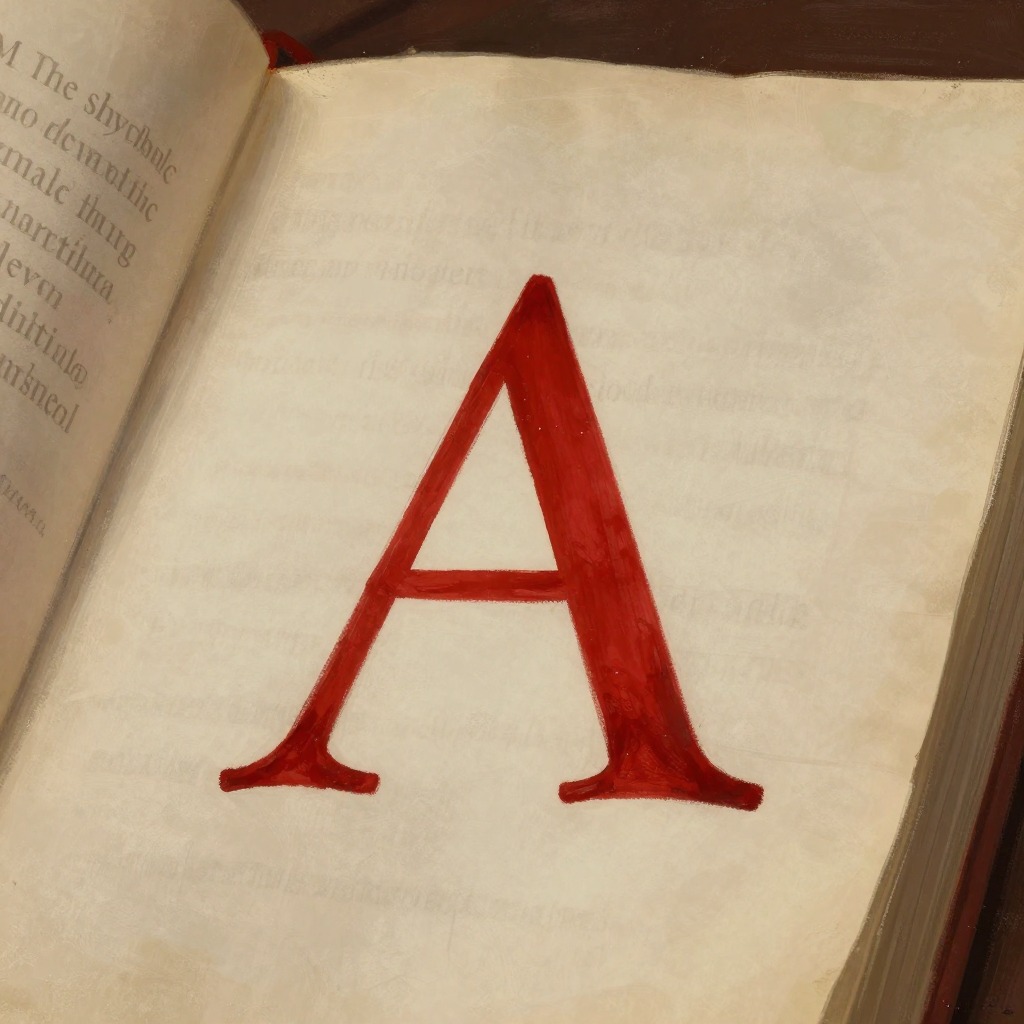
Looking upward to the zenith, Dimmesdale beheld the appearance of an immense letter—the letter A—marked out in lines of dull red light. The narrator imputes this vision solely to the disease in his own eye and heart, noting that the meteor may have shown itself at that point, burning duskily through a veil of cloud, but with no such shape as his guilty imagination gave it, or, at least, with so little definiteness that another's guilt might have seen another symbol in it. At the same moment, Dimmesdale was perfectly aware that little Pearl was pointing her finger towards old Roger Chillingworth, who stood at no great distance from the scaffold. The meteoric light imparted a new expression to the physician's features, revealing the malevolence with which he looked upon his victim, so vividly that it seemed still to remain painted on the darkness after the meteor had vanished.
The Public Interpretation
The next day, being the Sabbath, the grey-bearded sexton met Dimmesdale as he came down the pulpit steps and asked whether he had heard of the portent seen the previous night: a great red letter in the sky—the letter A—which the sexton interpreted to stand for Angel, because the good Governor Winthrop had been made an angel that past night. This interpretation, offered by the community, directly contrasts with Dimmesdale's private reading of the sign as a revelation of his own sin. The narrator notes that in those days it was common to interpret all meteoric appearances as revelations from a supernatural source, and that the belief was a favourite one with the forefathers, as betokening that their infant commonwealth was under a celestial guardianship of peculiar intimacy and strictness.
Thematic Significance
The meteor functions as a powerful symbol of the gap between public and private truth. For Dimmesdale, the celestial letter is a manifestation of his hidden guilt, a sign that his secret sin is written in the heavens themselves. For the townspeople, it is a providential announcement of a saint's death, a comforting confirmation of their religious worldview. The narrator's suggestion that the meteor may have had no definite shape at all, and that each observer saw what his own guilt or innocence disposed him to see, underscores the novel's exploration of subjective perception and the human tendency to project inner states onto the external world. The meteor thus becomes a blank screen onto which characters project their deepest fears and hopes, a celestial mirror reflecting the moral condition of the beholder. Its appearance during Dimmesdale's vigil, when he stands on the scaffold with Hester and Pearl, links it to the scarlet letter itself, as both are symbols that can be read in multiple, contradictory ways—as shame or as sanctity, as punishment or as grace.